
 Dec 23rd 2014, 08:00 hours, we landed in Iquitos,
4 deg south of equator- the largest city in the world that cannot be reached by
road. Ajay and Arnab squeezed into place in front of the crowded baggage
carousel and watched the river of bundled possessions flow past. Sreeja finally
spotted our backpacks and while we were on our way to the parking lot together,
we were greeted by Carlos, the cheerful driver and representative from the Muyuna
Amazon Lodge. Two wheeled and three wheeled motor bikes moved in all directions
from all directions and Carlos took the opportunity to display his own stunt
driving skills through the spaghetti like traffic. The city centre was a hive
of activity. It was alive with people, market stalls, and street salesmen and
amidst all; there was the occasional modern office building.
Dec 23rd 2014, 08:00 hours, we landed in Iquitos,
4 deg south of equator- the largest city in the world that cannot be reached by
road. Ajay and Arnab squeezed into place in front of the crowded baggage
carousel and watched the river of bundled possessions flow past. Sreeja finally
spotted our backpacks and while we were on our way to the parking lot together,
we were greeted by Carlos, the cheerful driver and representative from the Muyuna
Amazon Lodge. Two wheeled and three wheeled motor bikes moved in all directions
from all directions and Carlos took the opportunity to display his own stunt
driving skills through the spaghetti like traffic. The city centre was a hive
of activity. It was alive with people, market stalls, and street salesmen and
amidst all; there was the occasional modern office building. After a short briefing at the Muyuna Lodge office, where we
collected our rain boots and water bottles, hopped aboard the motorized boat
and cast off into the muddy waters of the mighty Amazon River. We watched the shore slip by; passed the
confluence of Maranon and Ucayali rivers, considered to be the point where
Amazon River begins, and sped down the Amazon into the rain forest, the
planet’s oldest and most spectacular land habitat. After an hour and half, the boat stopped for
a fifteen minute break at small town. Here we passed by a ferry with passengers
and loads of vegetables, fishes and other goods for local market. As we drifted
down the river, we were literally rolling in the bosom of the Selva, as the
Peruvian Amazon is known. The Amazon River weaves through the rainforest, with
over 1000 tributaries flowing into it. After a three hour boat ride from Iquitos,
we reached the Muyuna Lodge located on the bank of Inayako River, a tributary
of Amazon River. Nestled deep within the shady confines of Loreto reserve, the
lodge would be our home for the next four days. The bungalows were cozy,
intimate and provided a just- out- the- front -door access to the enveloping
lushness of the wilderness.
After a short briefing at the Muyuna Lodge office, where we
collected our rain boots and water bottles, hopped aboard the motorized boat
and cast off into the muddy waters of the mighty Amazon River. We watched the shore slip by; passed the
confluence of Maranon and Ucayali rivers, considered to be the point where
Amazon River begins, and sped down the Amazon into the rain forest, the
planet’s oldest and most spectacular land habitat. After an hour and half, the boat stopped for
a fifteen minute break at small town. Here we passed by a ferry with passengers
and loads of vegetables, fishes and other goods for local market. As we drifted
down the river, we were literally rolling in the bosom of the Selva, as the
Peruvian Amazon is known. The Amazon River weaves through the rainforest, with
over 1000 tributaries flowing into it. After a three hour boat ride from Iquitos,
we reached the Muyuna Lodge located on the bank of Inayako River, a tributary
of Amazon River. Nestled deep within the shady confines of Loreto reserve, the
lodge would be our home for the next four days. The bungalows were cozy,
intimate and provided a just- out- the- front -door access to the enveloping
lushness of the wilderness.  It was
indeed secluded with no cell network, Wi-Fi or TV and the dining area lit up by
a few 40 watt bulbs, glowing feebly with generator run electricity until 10 PM.
The hot humid weather created a haze that rested heavily on the rainforest and
the river. Black clouds rolled in later in the afternoon, bringing in rain and
lightning. Once the downpour stopped and after a quick dinner, we set out with
our guide Julio on a boat to get a glimpse of the nocturnal life on the river.
It was
indeed secluded with no cell network, Wi-Fi or TV and the dining area lit up by
a few 40 watt bulbs, glowing feebly with generator run electricity until 10 PM.
The hot humid weather created a haze that rested heavily on the rainforest and
the river. Black clouds rolled in later in the afternoon, bringing in rain and
lightning. Once the downpour stopped and after a quick dinner, we set out with
our guide Julio on a boat to get a glimpse of the nocturnal life on the river.
 As our flashlights reflected off the trees, lianas
crisscrossed every level of the rainforest, creating a network of narrow roads
travelled by all manner of monkeys, reptiles and insects. Every now and then, I
saw a pair of eyes glint in the darkness and I wondered whom they belonged to.
Frogs and insects were chirping along with the perpetual hum of cicadas. High
above, the call of Potoo- eerily similar to a human- whistle followed us, and
just as we turned, Julio spotted a Potoo (an owl like bird) on top of a branch.
After taking few pictures, Julio turned the flashlights to the front. We sat
peering into the darkness in search of nocturnal creatures. All of a sudden a
flock of fishing bats crisscrossed over our head and while we were busy
covering our heads ducking to stay clear of the bats, Julio put his hands in
the water and fished out a baby Caiman (crocodilian reptile). Voila!! We had the
closest view of a spectacled baby Caiman about 18 inches in length. It had a
bony ridge between its eyes, which made it look like as if it was wearing a
pair of spectacles. The eyes with vertical pupils were positioned high on
Caiman’s head allowing it to see above the water while the rest of the body remained
submerged. We took turns holding the caiman and posing for pictures. It was indeed
comical when Arnab shrieked at the thought that I might drop the caiman on him. Julio released the caiman in the river
and it immediately vanished in the abundance of water lettuce. Later we spotted
a few small colourful frogs. Finally we decided to call it a day and headed back
to our lodge, all excited in anticipation.
As our flashlights reflected off the trees, lianas
crisscrossed every level of the rainforest, creating a network of narrow roads
travelled by all manner of monkeys, reptiles and insects. Every now and then, I
saw a pair of eyes glint in the darkness and I wondered whom they belonged to.
Frogs and insects were chirping along with the perpetual hum of cicadas. High
above, the call of Potoo- eerily similar to a human- whistle followed us, and
just as we turned, Julio spotted a Potoo (an owl like bird) on top of a branch.
After taking few pictures, Julio turned the flashlights to the front. We sat
peering into the darkness in search of nocturnal creatures. All of a sudden a
flock of fishing bats crisscrossed over our head and while we were busy
covering our heads ducking to stay clear of the bats, Julio put his hands in
the water and fished out a baby Caiman (crocodilian reptile). Voila!! We had the
closest view of a spectacled baby Caiman about 18 inches in length. It had a
bony ridge between its eyes, which made it look like as if it was wearing a
pair of spectacles. The eyes with vertical pupils were positioned high on
Caiman’s head allowing it to see above the water while the rest of the body remained
submerged. We took turns holding the caiman and posing for pictures. It was indeed
comical when Arnab shrieked at the thought that I might drop the caiman on him. Julio released the caiman in the river
and it immediately vanished in the abundance of water lettuce. Later we spotted
a few small colourful frogs. Finally we decided to call it a day and headed back
to our lodge, all excited in anticipation. 
 | |
| Potoo perched on top of a branch |


We woke up to the tune of a hundred different Amazonian noises!
Julio called us out and we boarded a skiff that took us deep into the mangrove
forest.
We were soon out hiking in the forest. Beneath my feet the
moss and the leaves were as thick and lush as any carpet. Every step sank an
inch, as soon as I put my weight on it. The noise emanating from its recess was
louder than ever- a kind of green noise, indelibly live. There were hundreds of sounds blended
together –caw-caws, parrots, parakeets, monkeys, insects, humming birds, all
declaring their inarticulate existence in one undifferentiated shriek. It came
from all directions at once, everywhere and nowhere, out there and in here. I closed my eyes and stood dumbstruck; it was
so noisy! At times the jungle seemed as
silent as it was dark, and at other times the sounds were almost cacophonous.


 Amazon is the home to the most deadly vipers in the world,
but we were more freaked out by the bugs. Never had I seen so many insects.
There were hundreds of those tiny creatures in all shapes and colours flying
around us. They buzzed and hummed around our eyes and bit any bare part possible.
Poor Sreeja’s face was swollen with bug bites. She was not willing to wear the
head nets when we had left the lodge in the morning, but soon she changed her
mind and completely covered her head and face. Under the shadowy maze of tree
trunks, we saw a large tarantula crawling out of its silk-lined burrows. The
forest floor was full of colourful fungi that grew out of deadwood; colourful
bromeliads that peeped out of thick vines. Flowers as big as my head blossomed
full beneath the trees; sunlight was scarce this close to the jungle's
Amazon is the home to the most deadly vipers in the world,
but we were more freaked out by the bugs. Never had I seen so many insects.
There were hundreds of those tiny creatures in all shapes and colours flying
around us. They buzzed and hummed around our eyes and bit any bare part possible.
Poor Sreeja’s face was swollen with bug bites. She was not willing to wear the
head nets when we had left the lodge in the morning, but soon she changed her
mind and completely covered her head and face. Under the shadowy maze of tree
trunks, we saw a large tarantula crawling out of its silk-lined burrows. The
forest floor was full of colourful fungi that grew out of deadwood; colourful
bromeliads that peeped out of thick vines. Flowers as big as my head blossomed
full beneath the trees; sunlight was scarce this close to the jungle's 


floor;
the trees spread their roots above the ground in great fan-shaped buttresses
draped in moss. After a three hour hike we felt our nerves and will sapping. Ajay was all bitten on his balding head. In a
momentary act of profound conviction, he took the bush cutter from Julio,
lifted his arm and yelped pretending to be the Jungle Lord and posed in front
of the buttress roots. Arnab did not miss the opportunity and took a memorable
photograph. We realised that we had seen and heard enough for one morning. We
quickened our pace, our ears filled with sounds, clothes smelling of the jungle
and finally we were back at the boat! Sweat trickled down my chest and I sipped
on a bottle of water. We had our
breakfast on the boat. The Mangrove trees lined the moist river estuary, with their
roots jutting out of the thick river silt. As we paddled down the river, the
breeze came up, a pair of white collared hawks watched us from the top of a
tree, a three toed sloth hung upside down from the branch, the russet backed
Oropendolas were busy picking small tree branches to weave their nest with special
skill, a black and white hawk- eagle perched on top of the tree waiting for its
favourite prey - the squirrel and the monkey, a gorgeous great Egret
groomed its plumage to improve its
looks, the king vulture with the appealing colour of its head and eyes sat on its favourite spot - the luminous
surface of the tree tops . Either to attract or to remain unseen, these
combinations of tones and designs that range from classy to outrageous, prove
that the feathers of the birds are the best canvas that nature could find to
give splendour. I had brought a camera
but it did not help much, as I needed a zoom telephoto lens to capture such
special moments; however I tried taking a few pictures and continued watching the
flora and fauna through my binoculars.
 In the afternoon we paddled along the dense foliage along
the banks and the expansive horizon of the cloud forest. Sreeja was very
excited this time as we were out with fishing lines and hooks. Using small
pieces of meat as bait, we trolled the line behind, almost immediately the line
jerked and hand over hand Sreeja pulled in a small Piranha. In the end we
caught six fishes between the four of us. On our way back Julio pointed at some
prehistoric birds- The Hoatzin, a strange bird with prehistoric appearance,
which is considered one of the oldest bird species on earth. The sky was shimmering curtain of crimson,
violet and gold. Sreeja, Arnab and Ajay looked more tired and ragged than I had
ever seen them. I probably looked no better, but focusing on the forest helped
me to rejuvenate my senses.
In the afternoon we paddled along the dense foliage along
the banks and the expansive horizon of the cloud forest. Sreeja was very
excited this time as we were out with fishing lines and hooks. Using small
pieces of meat as bait, we trolled the line behind, almost immediately the line
jerked and hand over hand Sreeja pulled in a small Piranha. In the end we
caught six fishes between the four of us. On our way back Julio pointed at some
prehistoric birds- The Hoatzin, a strange bird with prehistoric appearance,
which is considered one of the oldest bird species on earth. The sky was shimmering curtain of crimson,
violet and gold. Sreeja, Arnab and Ajay looked more tired and ragged than I had
ever seen them. I probably looked no better, but focusing on the forest helped
me to rejuvenate my senses.
Back at lodge in the evening Ajay produced a bag of Haldiram
snacks and next moment his hand disappeared once again and he magically pulled
out a bottle of “Old Monk Rum”, an old favourite poison for us. He also
organised a bottle of Cachaca, a local Amazonian alcohol. What a way to
celebrate our entry to the jungle on the Christmas Eve. Unscrewing the top and
taking a big swig, we toasted -Wow!!
Here’s to the Amazon jungle!!


 Day 3, Dec 25th, we went hiking in the morning
through the forest. The jungle remained unbroken, thick and foreboded. A mother
monkey and two infants broke apart at our approach and disappeared into the trees
and branches. We could hear the motions of branches and the rustling of leaves.
Mixed herd of spider monkeys, capuchin monkeys and squirrel monkeys, pigmy marmoset
moved forward through the tree tops, terrified but strangely in silence.
Probably the fearsome black and chestnut eagle had attacked them. It was warm and the sky above us was festooned
with small clouds. We walked back to the lodge and had our breakfast. It was time to take a skiff ride to see the
macaws. We spotted two blue and yellow macaws fighting for space on the branch
over the Itaya River. Next we saw a flock of red macaws and a pair of parakeet
flying across the blue sky
Day 3, Dec 25th, we went hiking in the morning
through the forest. The jungle remained unbroken, thick and foreboded. A mother
monkey and two infants broke apart at our approach and disappeared into the trees
and branches. We could hear the motions of branches and the rustling of leaves.
Mixed herd of spider monkeys, capuchin monkeys and squirrel monkeys, pigmy marmoset
moved forward through the tree tops, terrified but strangely in silence.
Probably the fearsome black and chestnut eagle had attacked them. It was warm and the sky above us was festooned
with small clouds. We walked back to the lodge and had our breakfast. It was time to take a skiff ride to see the
macaws. We spotted two blue and yellow macaws fighting for space on the branch
over the Itaya River. Next we saw a flock of red macaws and a pair of parakeet
flying across the blue sky
The birds spread seeds, contribute to the Amazonian scenery
with the glamour of both their singing and colourful plumage. Facing such
undeniable truth, one can only exclaim, just like Columbus did, that “we feel
especially attracted“!
 In the afternoon, we visited a neighbouring village – Tansiyako.
Our guide, Julio had met his wife in this village, so he had soft corner for
Tansiyako. The villagers displayed some handicraft, handmade jeweleries for
sale. The local boys played a competitive game of soccer. It was interesting to
observe the rain harvesting techniques used by the villagers.
In the afternoon, we visited a neighbouring village – Tansiyako.
Our guide, Julio had met his wife in this village, so he had soft corner for
Tansiyako. The villagers displayed some handicraft, handmade jeweleries for
sale. The local boys played a competitive game of soccer. It was interesting to
observe the rain harvesting techniques used by the villagers. 
 |
| The Fer-de lance |
After an hour we were back to the dining room for the
Christmas dinner, a meal of chicken, salad, rice, plantain, fried piranha.
There were visitors from all over the world and everyone was happy to be in the
company of his fellow adventurer. As one told a tale the others appreciated,
one offered a song the others swayed to the tune. It might also have been the
Old Monk Rum which did most of the talking!
May 26th was our last day in the cloud forest. We
had our morning tea and then a skiff ride for an hour. On the way, our guide
and his partner pulled the skiff 50 feet into the river foliage, to show us the
amazing giant lily pads which had sharp spines on their underside to stop
aquatic animals from eating them. After taking a close look at the lily pads,
we headed towards a bay, where we had our breakfast onboard. The first harbingers
of excitement were the pink and grey dolphins. We heard them gulping down air
before we saw the first one. They sporadically broke the surface, grabbed a
quick breath and dove back to the mucky depths. The guide steered the skiff to
a point where the river was wide and the water was clearer, it was time for us to
take a dip in the river. Hours slipped by quickly, as the boat slowly and
steadily continued down the river. The river meandered in infinite oxbows,
forks and loops as winded its way through the jungle. We found ourselves lost among
the tree choked mazes, in which water current seemed to disappear. Just then we
spotted a green Iguana lurking on the tree branches. Iguanas can grow to be 6.6
feet (2 m) long.
After taking a close look at the lily pads,
we headed towards a bay, where we had our breakfast onboard. The first harbingers
of excitement were the pink and grey dolphins. We heard them gulping down air
before we saw the first one. They sporadically broke the surface, grabbed a
quick breath and dove back to the mucky depths. The guide steered the skiff to
a point where the river was wide and the water was clearer, it was time for us to
take a dip in the river. Hours slipped by quickly, as the boat slowly and
steadily continued down the river. The river meandered in infinite oxbows,
forks and loops as winded its way through the jungle. We found ourselves lost among
the tree choked mazes, in which water current seemed to disappear. Just then we
spotted a green Iguana lurking on the tree branches. Iguanas can grow to be 6.6
feet (2 m) long. 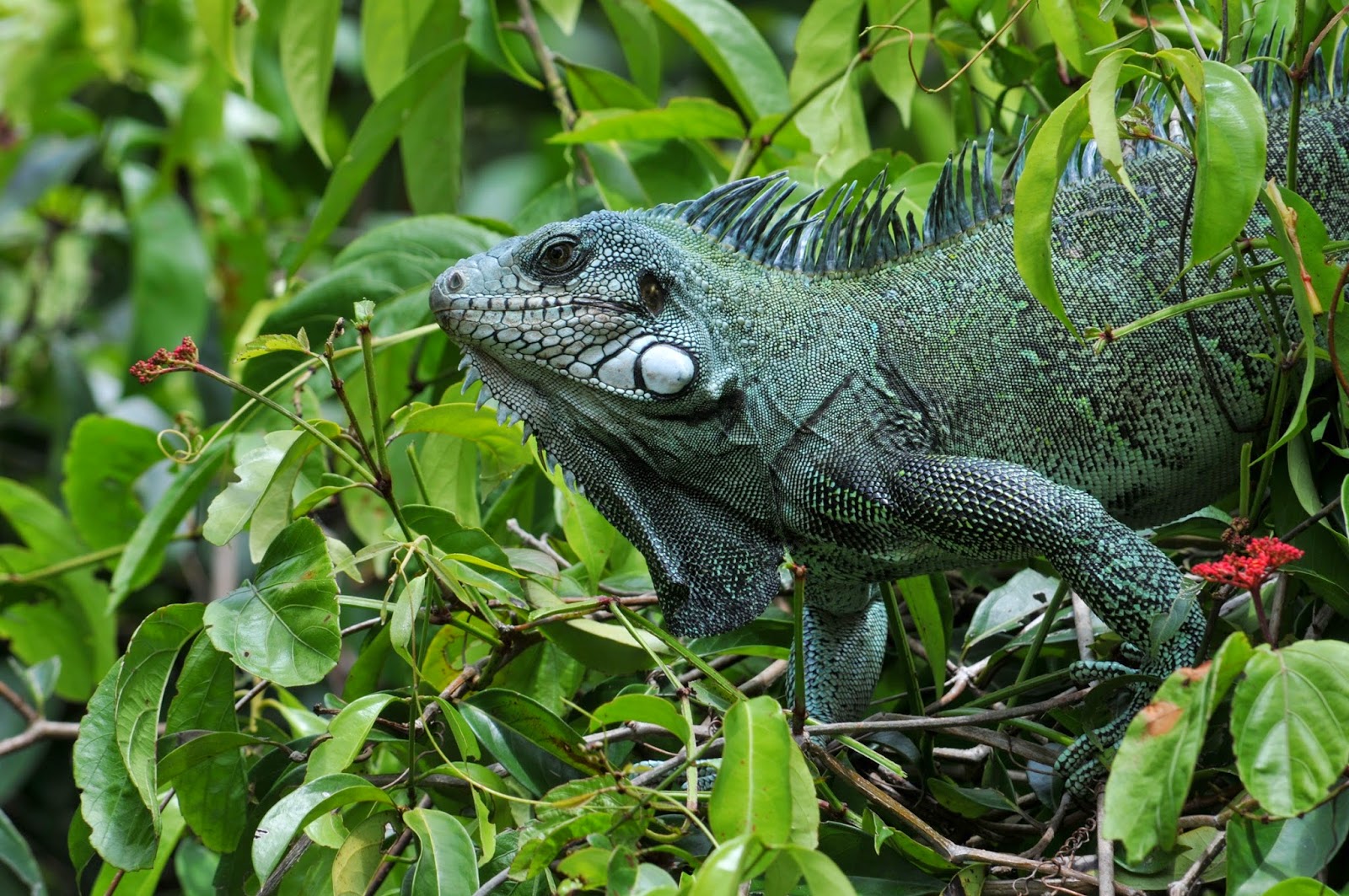
Back at the lodge we had a quick lunch and it was time to bid
goodbye. I saw a hummingbird flying backwards. The jungle was indeed magical! I
could not turn around and go back. Every sound, every glimpse will remain a
unique memory etched in the corner of my mind! Amazonia is and will remain Phenomena!!


NB:: Special thanks to Carol Schaer for sharing her Amazonia photographs


